
Interlocking Patio vs. Concrete in Markham: Which Is Better for Your Outdoor Space?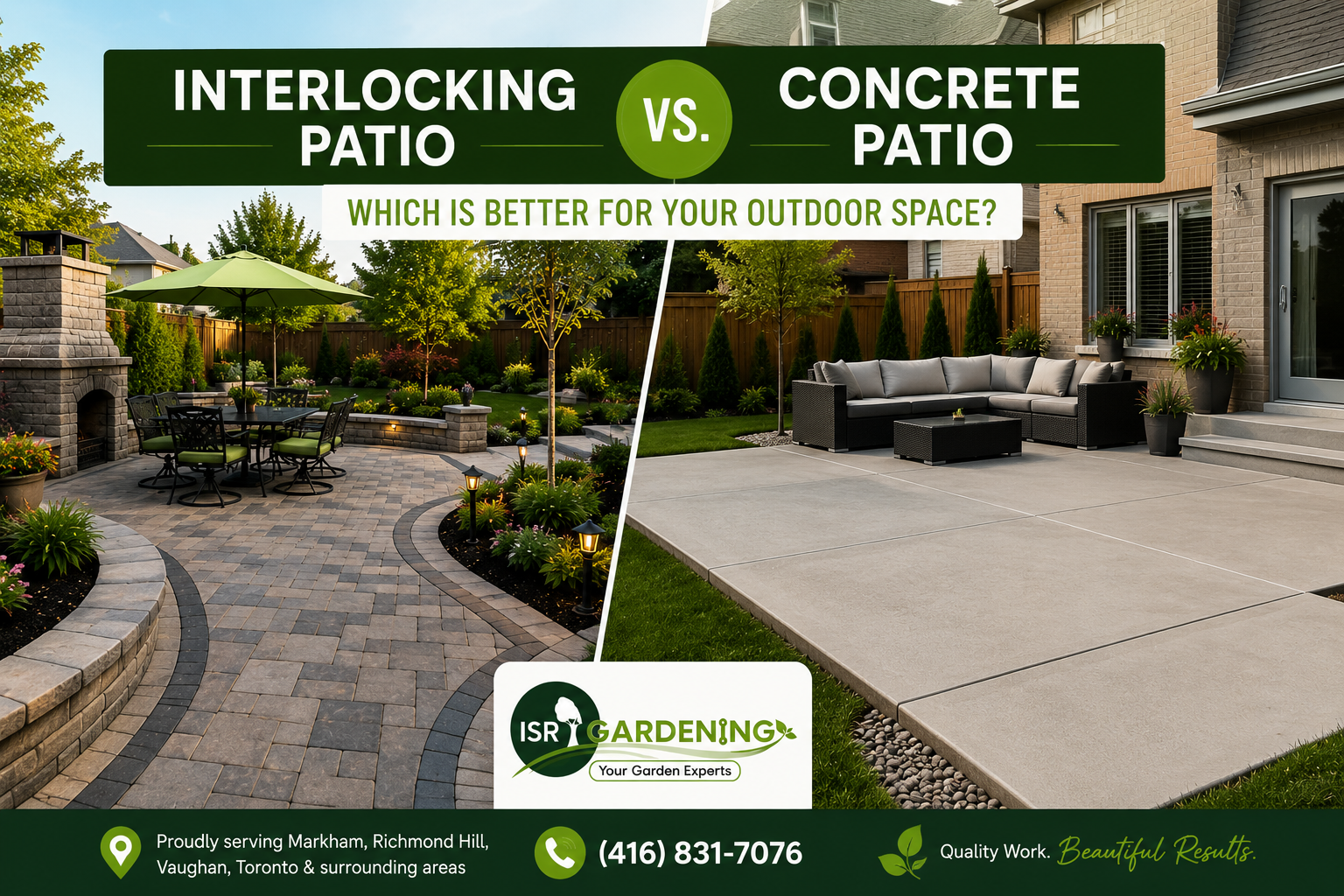
When planning a new patio, walkway, or outdoor living area, one of the first decisions homeowners face is choosing the right surface.
For homeowners in Markham, Richmond Hill, Vaughan, Toronto, and surrounding GTA communities, understanding these differences can help you make a better long-term investment in your property.
At ISR Gardening Inc., we provide professional interlocking and landscaping services designed around the property, the homeowner’s needs, and the way the outdoor space will actually be used.
What Is Interlocking?
Interlocking uses individual concrete or stone pavers installed over a properly prepared base.
The pavers fit together to create a durable surface that can be used for:
- Backyard patios
- Front entrances
- Walkways
- Garden paths
- Driveways
- Seating areas
- Outdoor living spaces
Because individual pavers are available in many shapes, sizes, textures, patterns, and tones, interlocking provides homeowners with considerable design flexibility.
What Is Poured Concrete?
Poured concrete creates a continuous solid surface.
The area is prepared, forms are installed, and concrete is poured and finished to create the patio or walkway.
Concrete can provide a clean, simple appearance and may work well for certain projects.
However, homeowners should consider more than the initial appearance when comparing it with interlocking.
1. Appearance and Design Options
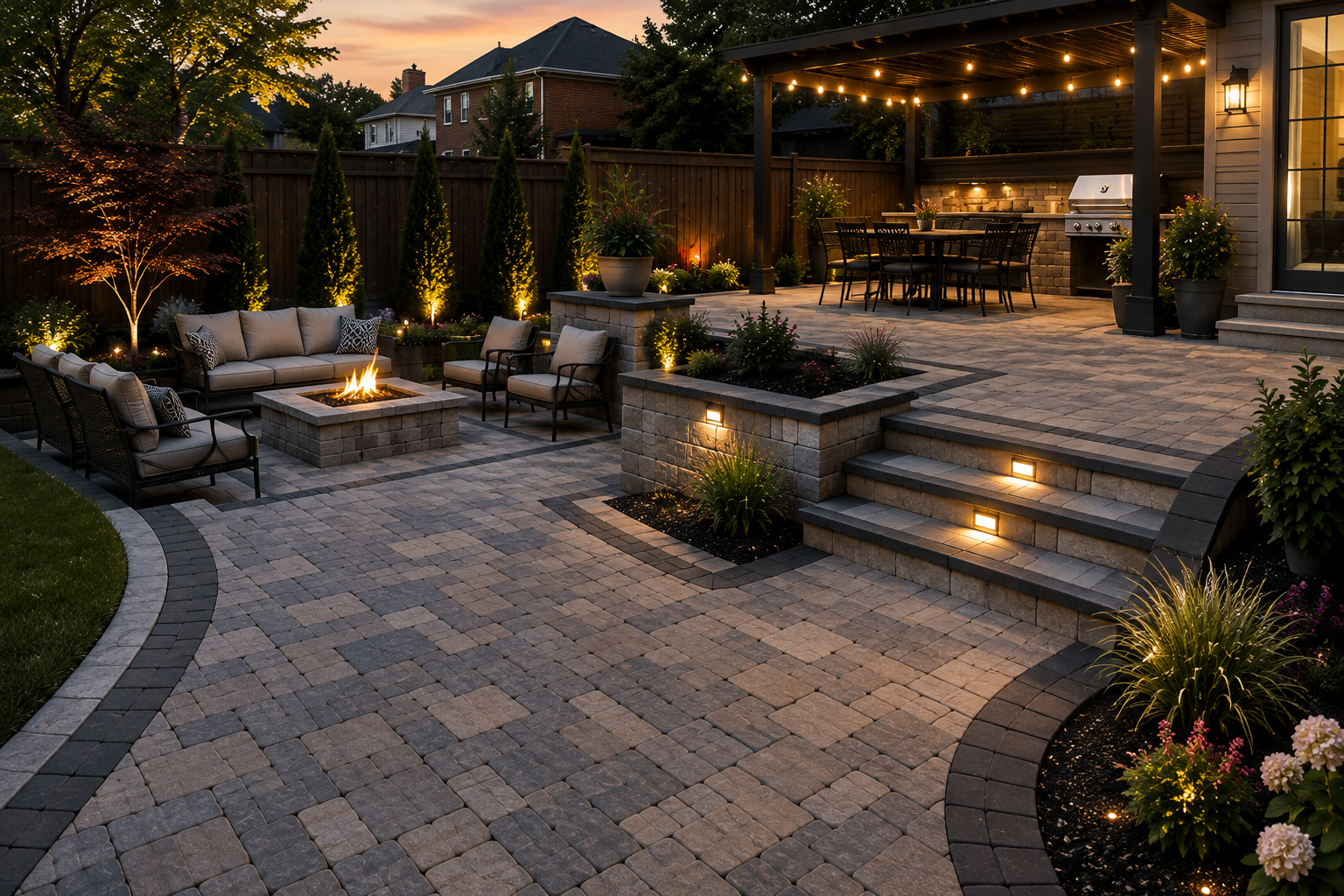
One of the biggest advantages of interlocking is design flexibility.
Instead of having one continuous surface, pavers can be arranged in different patterns and combined with borders or contrasting materials.
Interlocking can complement:
- Traditional homes
- Modern homes
- Garden landscapes
- Front entrances
- Outdoor kitchens
- Backyard entertainment areas
You can also use the hardscaping to visually connect different sections of your property.
Concrete generally provides a more uniform appearance.
For homeowners who want their patio or walkway to become an intentional part of the landscape design, interlocking can provide more opportunities for customization.
2. Ontario’s Freeze-Thaw Cycles Matter
Outdoor surfaces in Ontario experience significant seasonal changes.
Temperatures can move above and below freezing repeatedly, and moisture in the ground can freeze and expand.
Proper base preparation and drainage are therefore extremely important regardless of the surface you choose.
Interlocking consists of individual units rather than one continuous slab. When properly installed, the system has some ability to accommodate minor movement.
A large concrete surface behaves differently because it is essentially one continuous structure. Cracking can occur for various reasons, including movement, settlement and temperature changes.
No outdoor surface is completely maintenance-free, but appropriate installation becomes especially important in Ontario’s climate.
3. What Happens If Repairs Are Needed?
This is an important difference that homeowners sometimes overlook.
If an individual interlocking paver becomes damaged or an underground repair requires access beneath part of the patio, affected pavers can potentially be removed and reinstalled.
With poured concrete, repairing a damaged section may be more noticeable because the repaired concrete may not perfectly match the original surface.
That doesn’t automatically make one material appropriate for every property, but repairability is worth considering before construction begins.
4. Interlocking Can Create Defined Outdoor Zones
A patio doesn’t have to be one large rectangle behind the house.
Thoughtful hardscape design can divide a backyard into functional areas.
For example, your landscape might include:
Dining Area
A level interlocking patio with enough space for a table and chairs.
Barbecue Area
A dedicated section positioned conveniently near the house.
Lounge Area
A comfortable space for outdoor furniture or a fire feature where appropriate.
Garden Walkway
A pathway connecting the patio to lawns, gardens, gates, or other areas of the property.
These zones can make even a relatively simple backyard feel more organized and intentional.
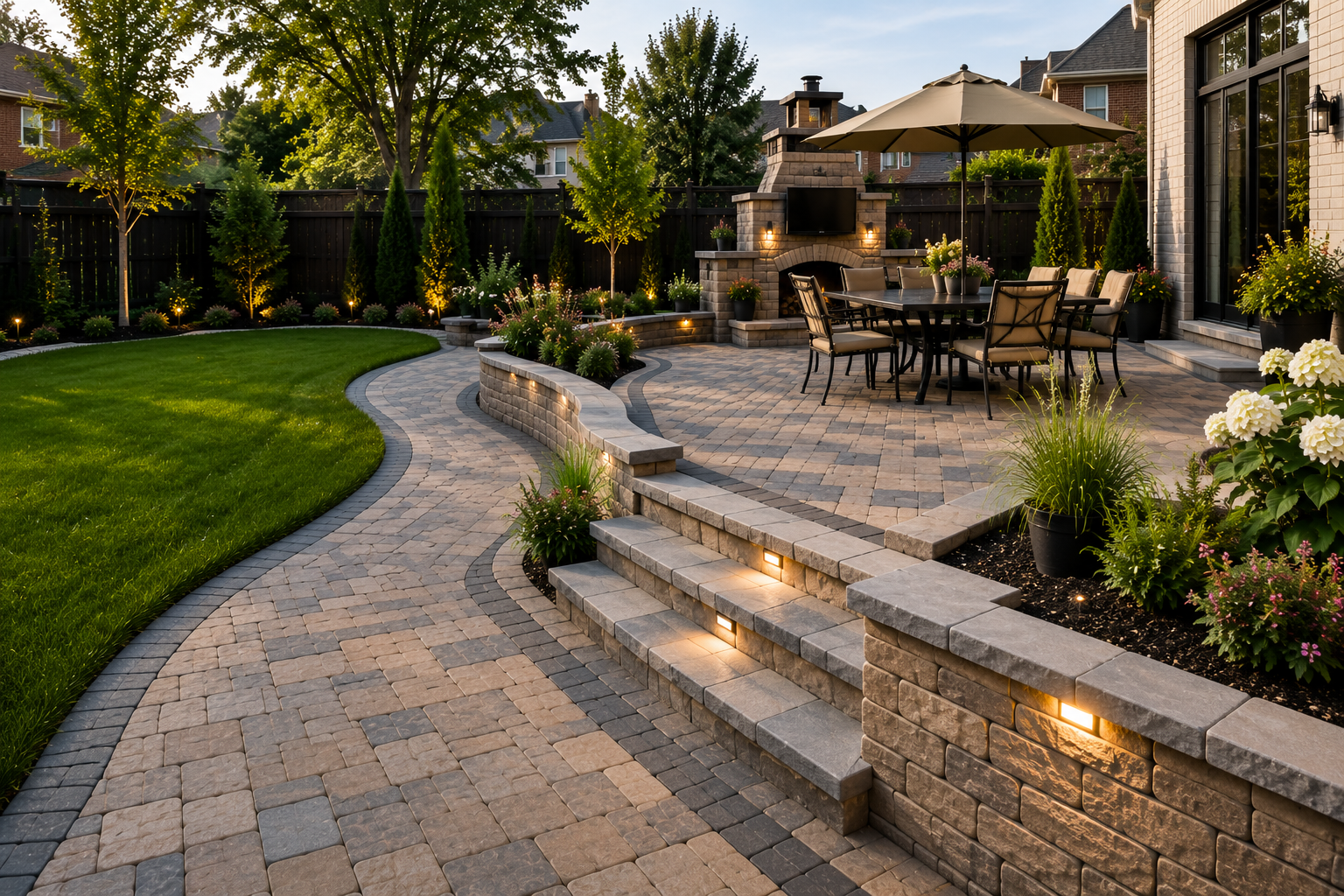
5. Interlocking Works Well With Landscaping
Hardscaping usually looks best when it doesn’t exist in isolation.
A patio surrounded only by empty space can feel unfinished.
Combining interlocking with landscaping can soften the hard surfaces and make the entire property feel more complete.
Consider incorporating:
- Garden beds
- Shrubs
- Ornamental grasses
- Small trees
- Fresh sod
- Landscape lighting
- Mulch
- Decorative borders
The objective is to create a balance between the hardscape and living landscape.
6. Don’t Ignore Drainage
A beautiful patio can still create problems if water movement wasn’t considered during planning.
Before installing interlocking or concrete, contractors should consider factors such as:
- Existing property grade
- Direction of surface water
- Nearby lawn elevations
- Downspouts
- Garden beds
- Adjacent structures
- Existing drainage conditions
Your patio should work with the rest of your property rather than unintentionally creating new areas where water collects.
7. Base Preparation Is Critical
The part of an interlocking project you can’t see can be just as important as the pavers you eventually see.
Proper excavation and base preparation help create a stable foundation for the finished surface.
Cutting corners underneath the patio may not be obvious immediately, but problems can become more noticeable over time.
Professional installation should focus on creating a durable foundation before concentrating on the final appearance.
8. Which Option Has Better Curb Appeal?
This depends on the property and design.
A professionally designed interlocking walkway can create a strong visual connection between the driveway, entrance, gardens, and home.
For backyard spaces, interlocking can make a patio feel like a deliberate extension of the house rather than simply a hard surface in the yard.
Borders, curves, patterns, and complementary landscaping can add further visual interest.
If improving curb appeal is one of your primary goals, consider the entire landscape rather than choosing the surface independently.
9. Is Interlocking Only for Large Properties?
No.
Interlocking can work particularly well in smaller spaces because careful design can make limited outdoor areas more functional.
A compact Markham backyard could potentially include:
- A small patio
- A narrow garden border
- Fresh lawn
- A pathway
- Privacy planting
The goal isn’t necessarily to install as much hardscaping as possible.
Good landscape design uses the available space efficiently while maintaining a comfortable balance between hard surfaces and greenery.
10. How Do You Choose the Right Interlocking Design?
Start with your home.
Look at its architecture, exterior colours, existing driveway, gardens, and surrounding landscape.
Then consider how you intend to use the space.
Ask yourself:
- How many people normally use the patio?
- Will you have outdoor furniture?
- Do you barbecue frequently?
- Do you want space for entertaining?
- How much lawn do you want to retain?
- Do you prefer modern or traditional landscaping?
- How much garden maintenance do you want?
These answers can help determine the appropriate size, layout, and overall landscape design.
Interlocking vs. Concrete: Which Should You Choose?
There isn’t one correct answer for every property.
Concrete may suit homeowners looking for a relatively straightforward continuous surface.
Interlocking may be particularly attractive to homeowners who prioritize:
- Design flexibility
- Individual paver repairability
- Custom patterns and borders
- Integration with landscaping
- Defined outdoor living areas
- A premium finished appearance
The quality of planning and installation matters regardless of which material you choose.
Think Beyond the Patio
If you’re investing in a new patio, it’s worth considering whether other parts of your landscape should be improved at the same time.
A complete project might combine:
Interlocking + fresh sod + garden beds + planting + landscape lighting.
Instead of treating each element as a separate project, planning them together can create a much more cohesive outdoor space.
Professional Interlocking in Markham
ISR Gardening Inc. provides landscaping and interlocking services for homeowners throughout Markham, Richmond Hill, Vaughan, Toronto, and surrounding GTA communities.
Whether you’re considering a new backyard patio, walkway, entrance, or complete landscape transformation, our team can help you plan an outdoor space that combines functionality with beautiful design.
Our landscaping services include:
- Interlocking installation
- Backyard and patio interlocking
- Driveway and walkway interlocking
- Retaining walls
- Sod installation
- Lawn care
- Garden and planting services
- Landscape maintenance
Ready to Upgrade Your Outdoor Space?
Your patio can become much more than somewhere to place outdoor furniture.
With thoughtful planning, quality installation, and complementary landscaping, it can become the centre of an outdoor space your family enjoys throughout the warmer months.
🌿 ISR Gardening Inc. — Your Garden Experts
📞 Call (416) 831-7076 for a FREE estimate.
📍 Proudly serving Markham, Richmond Hill, Vaughan, Toronto & surrounding areas.