
Why Grass Won’t Grow Under Trees in Markham: 7 Solutions for Shady Lawns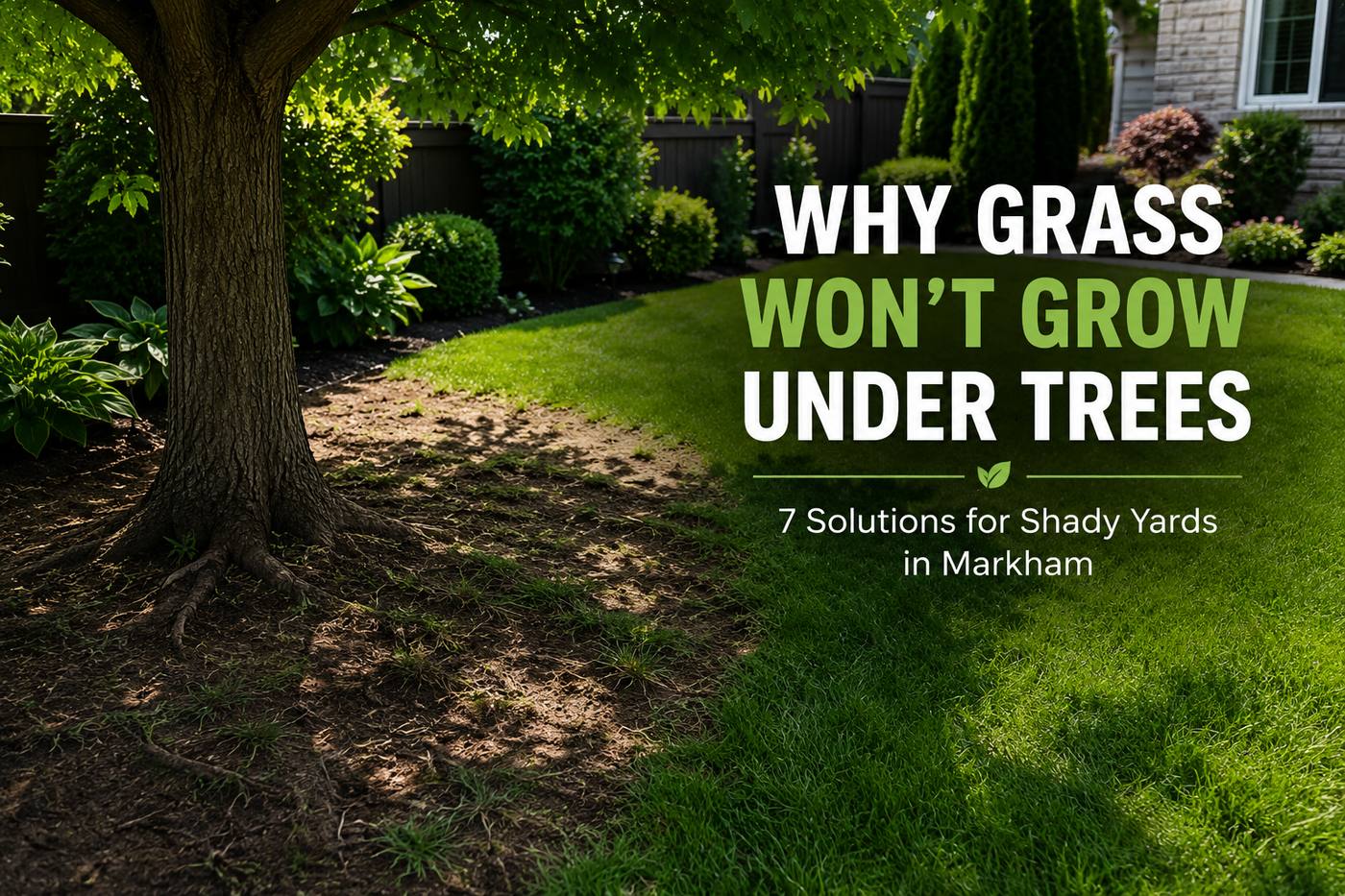
If you’ve tried everything but grass won’t grow under trees in your Markham yard, the problem may not be how you’re caring for your lawn.
Large trees can create some of the most difficult growing conditions on a residential property. Your grass may receive limited sunlight while simultaneously competing with mature tree roots for water and nutrients.
The result?
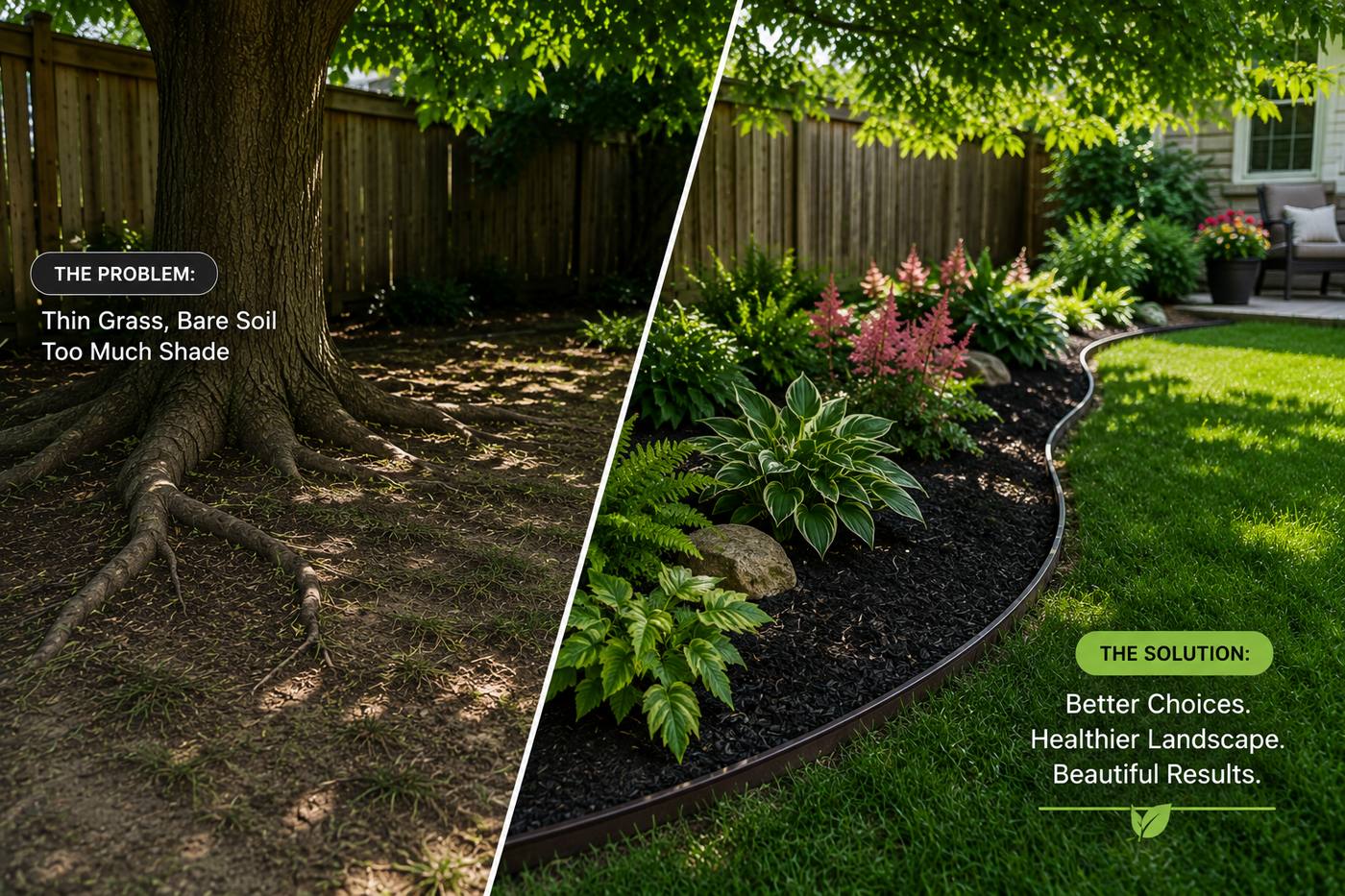
Thin grass, bare soil, weak growth and patches that seem to return no matter how many times you seed them.
Before spending money repairing the same area again, it helps to understand why grass struggles in shade and which lawn or landscaping solution makes the most sense for your property.
At ISR Gardening Inc., we help homeowners across Markham, Toronto, Richmond Hill, Vaughan and surrounding GTA communities improve difficult lawns and create attractive, practical landscapes.
Why Does Grass Struggle Under Trees?
It seems simple: grass needs soil and water, so why shouldn’t it grow underneath a tree?
The problem is that several growing challenges can occur in the same location.
Grass underneath mature trees may have to deal with:
- Limited direct sunlight
- Competition from tree roots
- Reduced access to moisture
- Poor air circulation
- Compacted soil
- Heavy leaf coverage
- Unsuitable grass varieties
Fixing only one of these issues may not be enough.
That’s why repeatedly throwing grass seed onto bare soil often produces disappointing results.
1. Determine How Much Sunlight the Area Actually Gets
Before repairing a shaded lawn, observe it throughout the day.
A location that looks reasonably bright at noon may receive very little direct sunlight overall.
Buildings, fences, neighbouring trees and the tree canopy itself can dramatically reduce the amount of light reaching the grass.
Grass generally performs better when it receives sufficient sunlight. Some grass varieties tolerate partial shade better than others, but extremely shaded locations can remain difficult regardless of how much fertilizer or seed you apply.
Try this simple test
Check the problem area at:
- 9:00 a.m.
- Noon
- 3:00 p.m.
- 6:00 p.m.
Take a picture each time.
You’ll get a much clearer idea of how much direct sunlight the lawn actually receives.
2. Don’t Assume More Sod Will Solve the Problem
Fresh sod can transform a damaged lawn incredibly quickly.
But there is an important question to answer first:
Why did the previous grass fail?
If the location has extreme shade, poor soil conditions or heavy root competition, replacing the grass without addressing those conditions may result in another struggling lawn.
Professional lawn replacement should begin with an assessment of the site rather than simply covering the problem.
3. Improve the Soil Around the Lawn
Healthy grass starts below the surface.
Soil around mature trees can become compacted from years of:
- Foot traffic
- Lawn equipment
- Construction
- Children playing
- Pets
- Natural settling
Compacted soil can make it more difficult for grass roots to access the air, moisture and nutrients they need.
Depending on the lawn’s condition, professional lawn care may include aeration, topdressing or other soil improvements.
However, care must be taken around established trees. Major excavation or inappropriate changes around tree roots can damage the tree.
4. Choose Grass Appropriate for Shadier Conditions
Not every grass type performs equally well in shade.
If an area receives some usable sunlight but conventional turf continually struggles, a more shade-tolerant grass mixture may be worth considering.
This is one situation where overseeding can sometimes make more sense than replacing the entire lawn.
The condition of the existing turf matters.
If most of the lawn remains healthy and only certain shaded sections are thin, targeted improvement may be enough.
If large areas are dead or severely damaged, a more substantial lawn renovation may be appropriate.
5. Adjust Your Watering
Here’s where shaded lawns become tricky.
You might assume an area underneath a tree stays moist because it doesn’t receive as much direct sunlight.
But mature trees have extensive root systems that also use water.
At the same time, watering too frequently can leave poorly drained shaded soil constantly damp.
So the answer isn’t simply:
“Water it more.”
The goal is appropriate moisture based on the actual soil conditions.
Check the soil instead of judging only by the appearance of the grass.
6. Keep Fallen Leaves Off the Lawn
A beautiful mature tree can produce an enormous amount of leaves.
When leaves remain on turf for too long, they can block sunlight and trap moisture against the grass.
That creates even more stress for an already shaded lawn.
During periods of heavy leaf drop, regular cleanup becomes particularly important.
Removing accumulated leaves also makes it easier to see which sections of lawn genuinely need repair.
7. Consider Whether Grass Is Really the Best Choice
This is the solution homeowners often overlook.
Not every square foot of your property needs to be lawn.
If you’ve repaired the same heavily shaded area year after year without success, fighting the conditions may not be the best use of your landscaping budget.
Instead, the area could potentially become part of the landscape design.
Depending on your property, possibilities may include:
- An expanded garden bed
- Shade-tolerant planting
- Mulched areas
- Decorative stone
- Defined landscape edging
- A combination of plants and hardscape elements
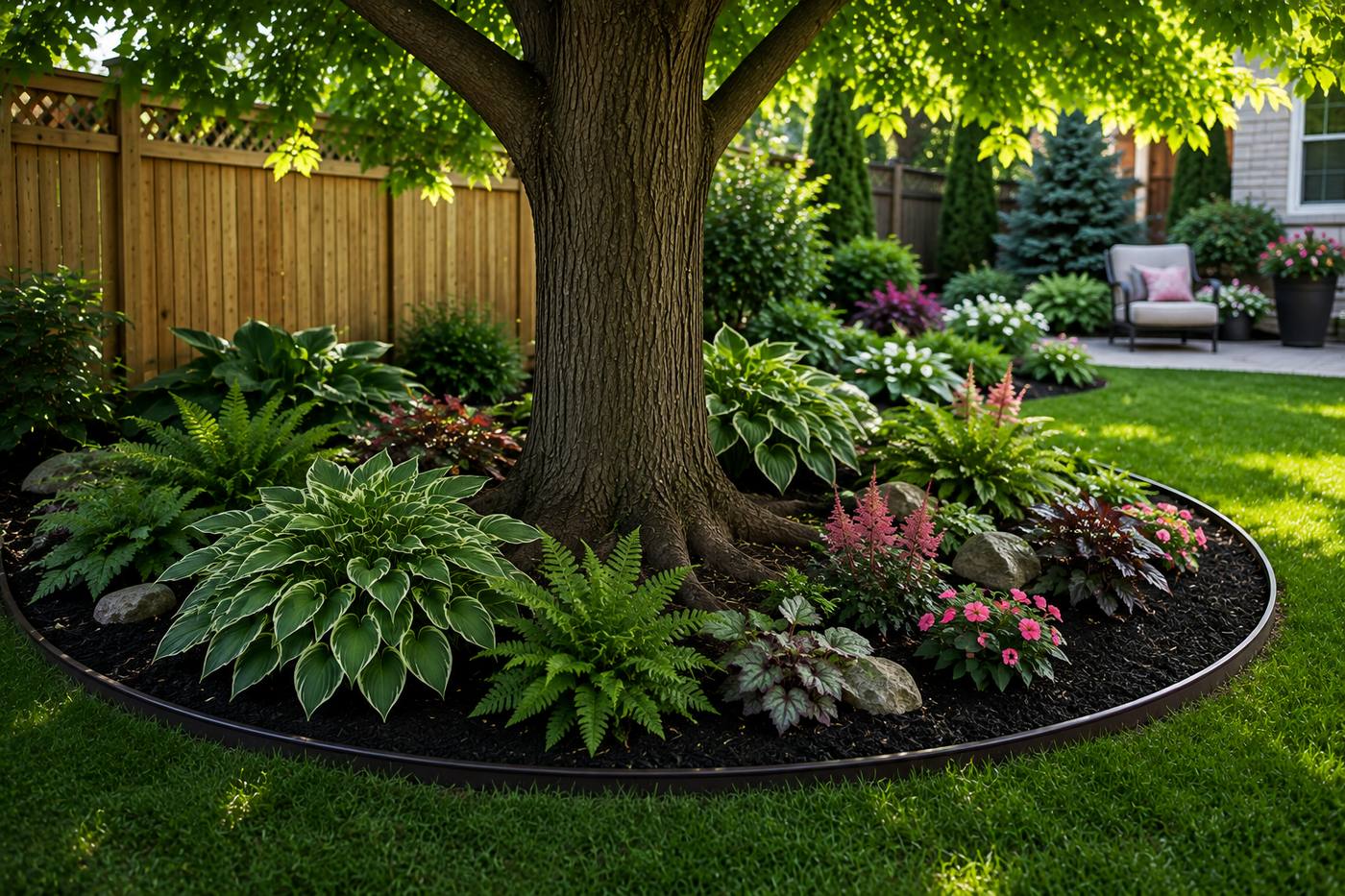
A professionally designed garden around a mature tree can look intentional and attractive instead of looking like a lawn that failed.
Sod vs. Overseeding for a Shaded Lawn
Which option should you choose?
Consider overseeding when:
Your existing lawn is generally healthy but has started thinning in moderately shaded areas.
Overseeding can introduce additional grass growth without replacing the entire lawn.
Consider sod when:
Large sections of lawn are severely damaged or need complete replacement and the location has suitable growing conditions for the new turf.
Proper soil preparation is critical.
Consider landscaping instead when:
The area receives very limited sunlight and grass has repeatedly failed despite reasonable lawn care.
Sometimes redesigning the problem area produces a better-looking and lower-maintenance result.
Should You Remove or Heavily Prune a Tree Just to Grow Grass?
A healthy mature tree can be an important landscape feature, so lawn improvement shouldn’t automatically mean removing it.
Appropriate pruning may sometimes improve light penetration, but tree work should be evaluated based on the health and structure of the tree—not simply as a way to expose the lawn to more sunlight.
In many situations, adapting the landscaping underneath the tree is the better design solution.
What About Bare Areas Around Tree Roots?
Avoid simply burying exposed roots under a thick layer of new soil.
Established trees have root systems that need appropriate growing conditions, and major changes around those roots can create problems.
Instead, the lawn and surrounding landscape should be evaluated together.
This is another reason why treating every bare area with sod isn’t always the right answer.
Turning a Difficult Shady Area Into a Landscape Feature
Imagine a lawn with a large mature tree in the middle.
Underneath it is a patch of thin, brown grass that never looks quite right.
Instead of repairing that patch for the fourth time, the landscape could potentially be redesigned so the tree becomes the focal point.
A defined garden bed, appropriate plants, clean edging and mulch can make the area look purposeful.
You’ve gone from trying to hide a lawn problem to creating a feature.
That’s the difference between repairing a yard and thinking about the landscape as a whole.
Common Mistakes Homeowners Make With Shady Lawns
Adding seed every spring without investigating the cause
If the environment isn’t suitable for grass, additional seed won’t correct the underlying problem.
Cutting shaded grass extremely short
Repeatedly scalping already stressed turf can make it even harder for the lawn to perform well.
Overwatering
Shade doesn’t automatically mean the soil needs more water.
Ignoring soil conditions
The problem may exist underneath the grass rather than in the grass itself.
Installing new sod without preparation
A beautiful new lawn still depends on appropriate site preparation and growing conditions.
Refusing to consider another landscape design
Sometimes the best lawn solution is realizing that a particular area shouldn’t be lawn at all.
Professional Lawn & Landscaping Solutions in Markham
Every property is different.
One homeowner may need overseeding.
Another may need lawn restoration and fresh sod.
Another may get a much better result by converting a difficult section of lawn into a professionally designed garden bed.
That’s why ISR Gardening Inc. takes the overall property into consideration before recommending landscape improvements.
We provide professional lawn and landscaping services throughout:
Markham • Toronto • Richmond Hill • Vaughan • surrounding GTA communities
Our services include lawn restoration, sod installation, overseeding, garden bed improvements, mulching, planting, landscape maintenance and complete landscaping solutions.
Stop Repairing the Same Patch of Grass Every Year
If grass underneath your trees disappears every season, don’t automatically buy another bag of seed.
Find out what’s causing the problem first.
The right solution could save you time, money and years of frustration while making your entire landscape look better.
📞 Call ISR Gardening Inc. at 416-831-7076 for a FREE quote.
Let our team assess your property and recommend the right lawn or landscaping solution for your outdoor space.
Frequently Asked Questions
Why won’t grass grow underneath my trees?
Insufficient sunlight, competition from tree roots, compacted soil, moisture conditions and the type of grass can all contribute to poor growth underneath trees.
Will sod grow underneath a large tree?
It depends on the conditions. Sod still requires adequate light, moisture, soil preparation and ongoing care. Extremely shaded locations may be better suited to another landscape treatment.
Should I use sod or seed in a shady yard?
If an existing lawn is still healthy, a suitable seed mixture may help improve thinner areas. Severely damaged lawns may require replacement, but the underlying reason for the damage should be identified first.
Can landscaping replace grass underneath trees?
Yes. Depending on the property and tree, garden beds, appropriate plantings, mulch or other landscape features can provide an attractive alternative where turf repeatedly struggles.
Does ISR Gardening provide lawn repair in Markham?
ISR Gardening Inc. provides lawn and landscaping services in Markham and other GTA communities, including sod installation, overseeding and landscape improvements.
Get a Free Lawn & Landscaping Quote
Your yard doesn’t need to look perfect everywhere for it to become a beautiful landscape.
Sometimes the areas that are hardest to maintain offer the best opportunities for a smarter design.
📞 416-831-7076
ISR Gardening Inc. — Your Garden Experts